

1. Task description
Nessus is a powerful network & vulnerability scanner developed by Tenable, Inc.. In this challenge, you will get access to an instance of Nessus running in the Hacking Lab environment.
After learning howto import a previous scan in nessus, you did learn howto perform your own scan against a target. Please answer the following questions:
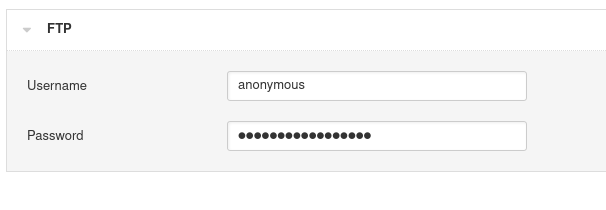
- Describe how you would configure a username and password when testing an ftp service?
- Describe how you would configure a domain when testing an Active Directory
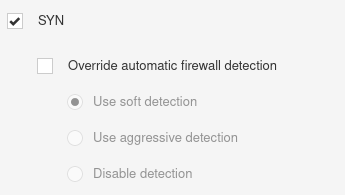
- Describe how you would configure the portscan prior the vulnerability scan
- Is is possible to run a brute-force attack against an ssh service?
2. Answers
- I would test if anonymous login is allowed. When you perform a new scan with nessus, you’ll find a template for that under credentials.
- Under credentials there is also a template for windows. Here you can enter your active directory credentials.

- I’d use the default SYN Scan with soft detection enabled.
- I didn’t find any option for that. By default setting it’s not possible, but it works if hydra is installed on the same system.
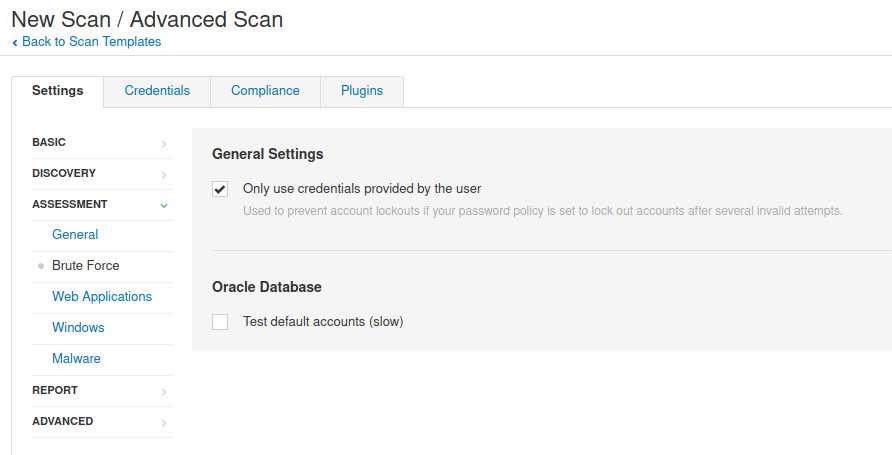
Brute Force Options
The Brute Force tab specifies how the scanner tests for information against SCADA systems.
Additionally, if Hydra is installed on the same host as a Nessus server linked to SecurityCenter, the Hydra section will be enabled. Hydra extends brute force login testing for the following services: Asterisk, AFP, Cisco AAA, Cisco auth, Cisco enable, CVS, Firebird, FTP, HTTP-FORM-GET, HTTP-FORM-POST, HTTP-GET, HTTP-HEAD, HTTP-PROXY, HTTPS-FORM-GET, HTTPS-FORM-POST, HTTPS-GET, HTTPS-HEAD, HTTP-Proxy, ICQ, IMAP, IRC, LDAP, MS-SQL, MYSQL, NCP, NNTP, Oracle Listener, Oracle SID, Oracle, PC-Anywhere, PCNFS, POP3, POSTGRES, RDP, Rexec, Rlogin, Rsh, S7-300, SAP/R3, SIP, SMB, SMTP, SMTP Enum, SNMP, SOCKS5, SSH (v1 and v2), Subversion, Teamspeak (TS2), Telnet, VMware-Auth, VNC and XMPP.
PDF Report
nessus_basics#1